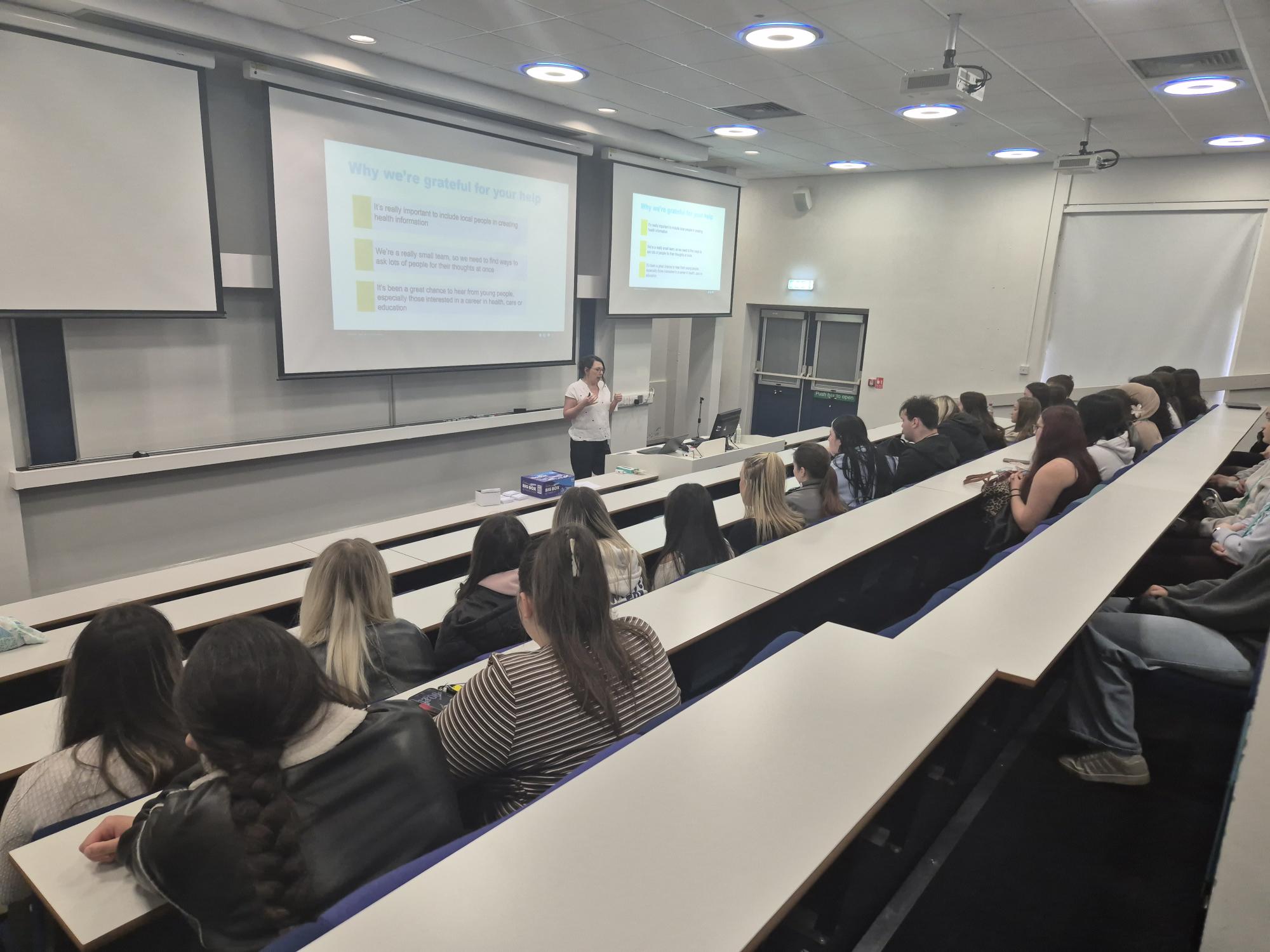



Students from across Health, Care and Early Years have played a key role in a year-long partnership with NHS health literacy teams, using their own experiences and perspectives to help improve the way healthcare information is communicated.
What if the next time you read an NHS leaflet, letter or webpage, you could understand every word?
That is exactly the question students at South Tyneside College have been helping healthcare professionals explore through a unique health literacy feedback project.
Throughout the 2025/26 academic year, students from across Health, Care and Early Years worked alongside the North East and North Cumbria Health Literacy Team and South Tyneside and Sunderland NHS Foundation Trust, reviewing real healthcare information and providing feedback on how clear, accessible and easy to understand it was.
AND importantly, this wasn’t simply a classroom exercise.
The students’ feedback was used by healthcare teams to improve communications, inform future work and help professionals understand how young people interpret health information.
Giving young people a voice in healthcare
Health literacy is about making sure people can find, understand and use health information effectively. Clear communication is particularly important when people are making decisions about their health or trying to access services.
The project was developed to give local people a greater voice in how health information is created, while also giving students the opportunity to take part in a genuine piece of research and engagement. Students from a range of courses were involved throughout the year, including T Level Health, T Level Education and Early Years, Health and Social Care and Adult Social Care.
Students were given real healthcare documents to review, including leaflets, letters, webpages, posters and other communications. They were asked to consider questions such as:
- Is the information easy to understand?
- Are there words or phrases that might be confusing?
- Is everything explained clearly?
- Is the tone appropriate?
- Would someone know what they needed to do next?
- What could be changed to make the information clearer?
Their feedback was then collected and analysed by the health literacy team before being shared with relevant healthcare professionals.
A member of the South Tyneside and Sunderland NHS Foundation Trust team said:
This project has been amazingly valuable for us. We've loved hearing from young people, which we don't always get enough chances to do. Their insights have helped us to make changes that will make information easier for people to understand and act on. The college has been a wonderful partner, and we're excited to see how this project develops in the future.
One of the most valuable aspects of the project was that students could see that their opinions were genuinely being listened to.
For example, students reviewed information about accessing dental services and questioned terminology that may be familiar to healthcare professionals but less familiar to the general public.
One example was the use of the term “ICB”. Students highlighted that they did not know what this meant, providing an important reminder that professional terminology can create barriers when communicating with the public.
Students also reviewed an Adult Weight Management opt-in letter, helping the team understand why some people may not have been clear about how to sign up for the service.
Following feedback from students, a revised version of the letter was tested. The proportion of students correctly understanding how to opt in increased significantly.
Feedback from students was also shared with healthcare teams to help inform changes to webpages, leaflets and letters, future document reviews, training and guidance.
In one example, students reviewed a lung nodule leaflet and provided overwhelmingly positive feedback. This feedback has been used in region-wide health literacy training to show how the leaflet is an example of good practice.
Students making an impact
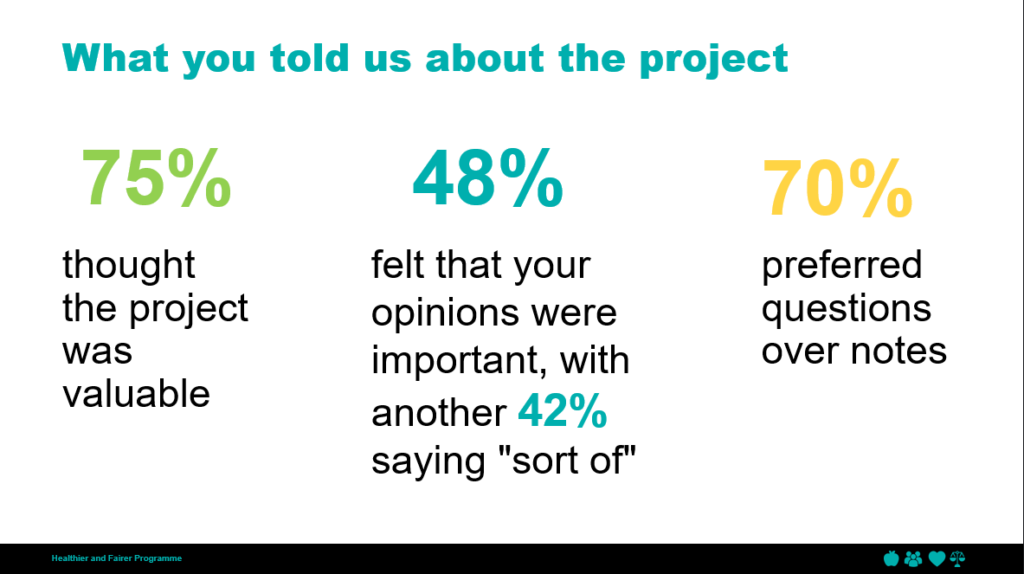
Across the four rounds of the project, approximately 100 students took part, contributing to the review of 33 different health-related documents.
The final student evaluation highlighted just how valuable the experience was:
- 90% of respondents felt their opinions were important or somewhat important.
- 75% of respondents felt the project was valuable.
- 75% of respondents felt the project was very or somewhat valuable to their learning.
For students preparing for careers in health, care and education, the opportunity provided an insight into how healthcare organisations communicate with the public and why clear, accessible information matters.
It also allowed them to develop skills in critical thinking, communication, research and giving constructive feedback — skills that will be valuable in their future careers.
As one member of staff reflected:
It was an excellent opportunity for the learners to feel that they were taking part in a real world, impactful project. It also helped to raise the learners' own health literacy.
Learning beyond the classroom
For our students, the project provided an opportunity to experience what it is like to contribute to a real-world project with healthcare organisations.
Rather than simply learning about communication, health literacy and professional practice in the classroom, students were able to apply their knowledge to real documents being used by health and care services.
For those considering careers in health and care, this provided valuable insight into the importance of communicating clearly with patients, service users and communities.
The experience also gave students a valuable example of real-world experience they could draw on when applying for university, completing personal statements or attending interviews.
Ruth Hobson, Healthcare Lecturer at Tyne Coast College, said:
We chose to take part in the health literacy project because we saw it as a fantastic opportunity to embed health literacy into the curriculum while giving our students real-world experience. Working alongside local NHS teams has helped our learners build confidence, develop practical skills and understand the importance of clear communication when supporting people with their health and wellbeing. As a college serving a diverse community, we also see health literacy as an important way to help reduce health inequalities and empower young people and their families.
A partnership that is making a difference
The project has demonstrated the value of bringing education and healthcare organisations together to create opportunities that benefit both students and the wider community.
The health literacy team gained valuable insight into how young people understand health information, while students developed their confidence and understanding of the importance of accessible communication.
Most importantly, students could see that their voices mattered.
The project team also reflected on how the initiative could evolve, responding to feedback from both students and staff.
Following the success of the first year, the project will continue into 2026/27, with plans to make the process more digital, introduce more group activities and use documents that are even more closely linked to students’ courses and interests. The aim is to make the experience even more engaging for students while continuing to provide valuable feedback to health and care organisations.
For students who may go on to become the healthcare professionals, carers, educators and community workers of the future, opportunities like this provide an important reminder that their voice has value.
Through this partnership, our students haven’t simply been learning about health literacy.
They have been helping to shape it.
A huge thank you to the North East and North Cumbria Health Literacy Team, South Tyneside and Sunderland NHS Foundation Trust, our teaching teams and, most importantly, all of the students who contributed their time, ideas and feedback throughout the project.
Interested in a career in health, social care or education? Explore the courses available HERE and discover where your learning could take you.